
 English
 Español
 Pусский
 Indonesia

Dây chuyền đúc liên tục tự động
Automated Continuous Casting Line An automated continuous casting line is a highly efficient and advanced manufacturing system used primarily in the metal industry to produce long, uniform metal products such as billets, blooms, and slabs. This process involves the continuous pouring of molten metal into a water-cooled mold, solidifying it into a semi-finished shape, which is then further processed through cutting, rolling, or extrusion. Automation ensures precision, consistency, and improved productivity while reducing human intervention and operational costs. Key Components of an Automated Continuous Casting Line 1. Melting and Pouring System The process begins with the melting of raw metal in a furnace. Once the desired temperature and composition are achieved, the molten metal is transferred to a tundish, which regulates the flow into the mold. Automated ladles and sensors ensure precise pouring to maintain quality. 2. Water-Cooled Mold The molten metal enters a water-cooled copper mold, where it begins to solidify at the edges while remaining liquid at the core. Oscillation mechanisms prevent sticking and ensure smooth withdrawal. 3. Secondary Cooling Zone After exiting the mold, the semi-solidified metal passes through a series of water sprays or air mist systems to further cool and solidify it uniformly. 4. Withdrawal and Straightening Units Pinch rolls or withdrawal machines pull the solidified strand at a controlled speed. If necessary, a straightening device corrects any deformities before cutting. 5. Cutting System Automated torches or shears cut the continuous strand into predetermined lengths based on downstream requirements. Sensors ensure accurate measurements. 6. Handling and Stacking The cut pieces are conveyed to cooling beds or directly to storage. Robotic arms or automated stacking systems organize the final products for further processing or shipment. Advantages of Automation - Consistency & Quality: Automated controls minimize defects like cracks, porosity, or uneven cooling. - Efficiency: Continuous operation reduces downtime and increases output. - Safety: Reduced manual handling lowers workplace hazards. - Cost-Effectiveness: Energy and labor savings improve overall profitability. Applications Automated continuous casting lines are widely used in steel, aluminum, and copper production, supplying materials for construction, automotive, and machinery industries. By integrating advanced sensors, real-time monitoring, and AI-driven adjustments, modern automated continuous casting lines represent the future of metal manufacturing, delivering high precision and sustainability.
Sản phẩm
Danh mục:
-
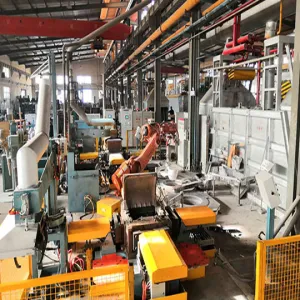
Dây chuyền sản xuất tự động đúc liên tục
Phân loại của họ: Dây chuyền sản xuất đúc tự độngLượt xem: 30Số:Thời gian phát hành: 2025-12-22 10:31:09Dây chuyền sản xuất tự động đúc liên tục được thiết kế để mang lại khả năng đúc kim loại hiệu quả cao, chính xác và nhất quán cho các ứng dụng công nghiệp. Tích hợp xử lý khuôn tự động, rót có kiểm soát và giám sát thời gian thực, nó đảm bảo độ chính xác về kích thước vượt trội và giảm thiểu khuyết tật. Thích hợp cho thép, nhôm và hợp kim đồng, dây chuyền sản xuất này nâng cao năng suất đồng thời giảm thiểu lãng phí nguyên liệu. Cảm biến tiên tiến và hệ thống điều khiển thông minh tối ưu hóa các quy trình hóa rắn, làm mát và kiểm tra chất lượng, khiến nó trở nên lý tưởng cho sản xuất ô tô, hàng không vũ trụ và máy móc hạng nặng. Với hoạt động tiết kiệm năng lượng và hiệu suất đáng tin cậy, giải pháp đúc tự động này hợp lý hóa quy trình sản xuất, cải thiện năng suất và hỗ trợ các yêu cầu công nghiệp có khối lượng lớn, được điều khiển chính xác.
Tin tức
Danh mục:
Không có kết quả tìm kiếm!
Trường hợp
Danh mục:
Không có kết quả tìm kiếm!
Video
Danh mục:
Không có kết quả tìm kiếm!
Tải về
Danh mục:
Không có kết quả tìm kiếm!
Tuyển dụng
Danh mục:
Không có kết quả tìm kiếm!
Sản phẩm được đề xuất
Không có kết quả tìm kiếm!



 Điện thoại