
 English
 Español
 Pусский
 Indonesia

Robot chung
Joint Robot: A Comprehensive Overview A joint robot, also known as an articulated robot, is a highly versatile and widely used type of industrial robot characterized by its multiple rotary joints, which enable precise and flexible movements. These robots are designed to perform complex tasks in various industries, including manufacturing, assembly, welding, material handling, and even medical applications. Their ability to mimic human arm movements makes them indispensable in automation. Structure and Design A typical joint robot consists of several key components: 1. Base: The fixed part of the robot that provides stability. 2. Articulated Arms: Multiple interconnected segments (links) connected by rotary joints, allowing a wide range of motion. 3. End-Effector: The tool or gripper attached to the robot’s arm, customized for specific tasks like welding, painting, or picking objects. 4. Controller: The "brain" of the robot, which processes commands and ensures accurate movement. The number of joints (degrees of freedom) varies, with common configurations ranging from 4 to 6 axes. Six-axis robots offer the highest flexibility, enabling movement in all directions, including rotation and bending. Key Advantages - High Precision: Joint robots can perform repetitive tasks with micron-level accuracy. - Flexibility: Their multi-joint design allows them to reach confined spaces and adjust to complex paths. - Speed and Efficiency: They significantly improve production speed while maintaining consistency. - Programmability: Operators can easily reprogram them for different tasks, reducing downtime. Applications - Manufacturing: Used in assembly lines for tasks like screwing, drilling, and part placement. - Welding: Capable of performing arc and spot welding with high repeatability. - Packaging: Efficiently handles sorting, palletizing, and labeling. - Medical: Assists in surgeries and laboratory automation due to their precision. Future Trends Advancements in AI and machine learning are enhancing joint robots' capabilities, enabling them to adapt to dynamic environments. Collaborative robots (cobots) are also emerging, allowing safe human-robot interaction. In summary, joint robots are a cornerstone of modern automation, offering unmatched precision, adaptability, and efficiency across industries. Their continued evolution promises even greater contributions to smart manufacturing and beyond.
Sản phẩm
Danh mục:
-
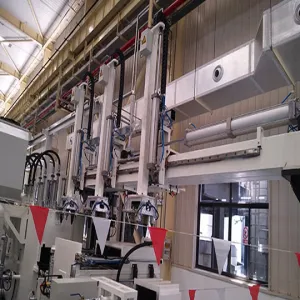
Bộ điều khiển giàn đa trục tự động
Phân loại của họ: Bộ điều khiển giànLượt xem: 36Số:Thời gian phát hành: 2025-12-18 16:01:41Bộ điều khiển giàn đa trục tự động là một giải pháp tiên tiến cho các ứng dụng công nghiệp và xây dựng, được thiết kế để xử lý, nâng và định vị các giàn lớn với độ chính xác và hiệu quả. Được trang bị nhiều trục chuyển động, bộ truyền động điều khiển bằng servo tiên tiến và cảm biến tích hợp, nó đảm bảo sự liên kết chính xác và vận hành an toàn cho các bộ phận kết cấu nặng. Thiết kế mạnh mẽ và hệ thống điều khiển có thể lập trình của nó cho phép xử lý liền mạch các cụm giàn phức tạp, giảm chi phí lao động và nâng cao năng suất công việc. Lý tưởng cho các nhà kho, nhà máy và công trường xây dựng quy mô lớn, bộ điều khiển này cải thiện hiệu quả hoạt động, đảm bảo chất lượng ổn định và đáp ứng nhu cầu khắt khe của các dự án xây dựng công nghiệp hiện đại.
Tin tức
Danh mục:
Không có kết quả tìm kiếm!
Trường hợp
Danh mục:
Không có kết quả tìm kiếm!
Video
Danh mục:
Không có kết quả tìm kiếm!
Tải về
Danh mục:
Không có kết quả tìm kiếm!
Tuyển dụng
Danh mục:
Không có kết quả tìm kiếm!
Sản phẩm được đề xuất
Không có kết quả tìm kiếm!



 Điện thoại